

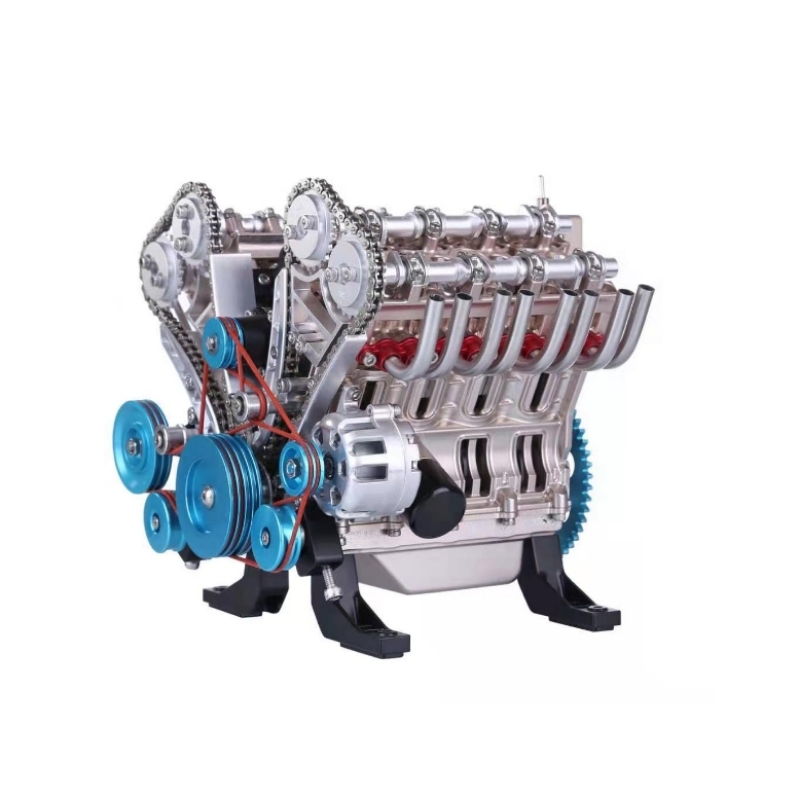
V4 Engine



Category
Engine modelsModel DM 13
Basic Model:
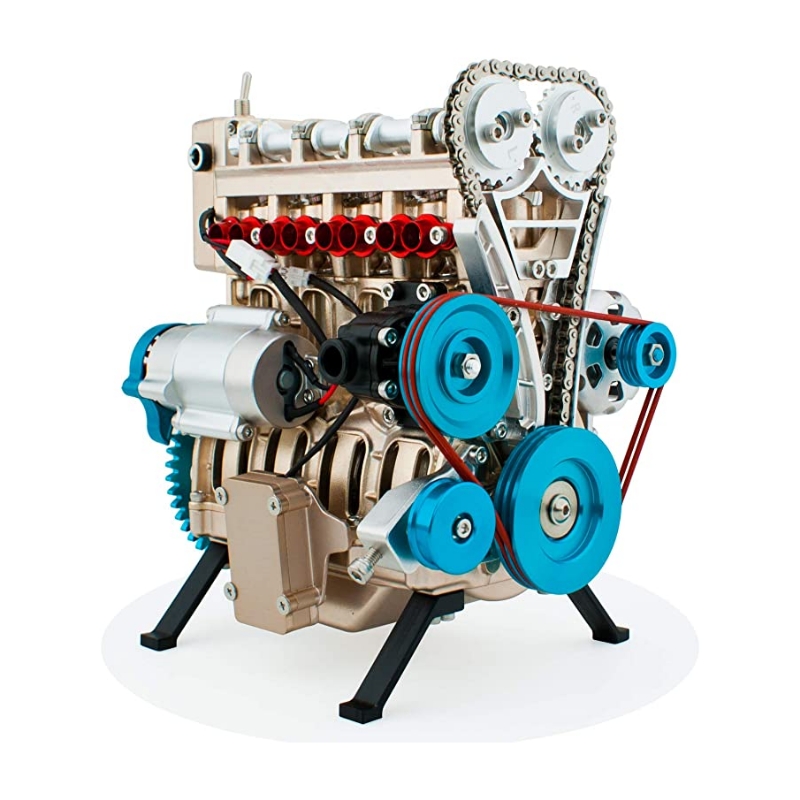
Educational, fully functional model of a four-cylinder inline combustion engine. The kit consists of 357 parts, with each piece labeled and packaged in special foam holders to ensure organized assembly and that the kit is always complete and undamaged. It includes a simple and colorful step-by-step instruction manual. Students assemble the engine model using the included hex key.
High Craftsmanship Level:
The entire engine is made of metal using precise CNC casting and aluminum alloy oxidation. This method ensures an extremely precise and accurate engine mechanism.
Ideal for Schools:
During assembly, students will understand the principles of the engine and discover the beauty of its mechanics. They will practice fine motor skills, precision, concentration, and technical literacy (understanding the assembly instructions). We recommend building the engine in pairs of students to enhance teamwork skills.
Engine Functionality:
The model engine is powered by a small electric motor, which demonstrates how the engine works, the purpose of the crankshaft, pistons, cylinder heads, etc. The crankshaft, connecting rods, pistons, and other engine components can be observed through special transparent sections.
Wide Range of Applications:
The model engine can be used in physics classes, human world and work lessons, workshops, technical classrooms, clubs, extracurricular activities, technical hobbyist groups, etc. It can serve as a demonstrative tool for teachers, but it is even better as an assembly kit for a pair of students, allowing the entire class to experience engine assembly and discover the wonderful world of mechanics. An ideal way to inspire children’s interest in science and technology.
Specifications:
Material: Aluminum alloy + stainless steel
Process: Anodized
Product Size: 158,5*117*182mm
Number of parts: 357 pieces
Charging Voltage: DC 5V
Lithium Battery Capacity: 3.7V, 450mAh
Charging Time: 2 hours
Working Time: 1.5 hours
Metal Box Size: 342 * 242 * 150 mm
Weight: 3.1 kg
Recommended Age: 12+
Package Contents:
1 x V4 Engine Assembly Kit 1
1 x User manual
1 set x Tools for engine assembly
Engine History:
Birth of the Inline 4V Engine: In 1894, Maybach and Paul Daimler completed the development and design of the inline 4V engine with a cast cylinder block using the patented carburetor technology that Maybach acquired in 1893. By the end of the 19th century, every good car in the world had this inline four-cylinder engine from Maybach. This happened shortly after Maybach and Paul Daimler were pushed out of the company. In 1913, Jules Goux won the Indianapolis 500 Grand Prix with a Peugeot 500. The engine for this car was an inline four-cylinder designed by Ernest Henry. This design represents the first use of dual overhead camshafts and four valves per cycle, making it very powerful as a racing engine. It is still the design standard for inline 4V engines used in racing cars.